
5 Pieces of Gear You’ll Find in Every Professional Recording Studio
Whether you step into an iconic commercial facility in London or browse through boutique production spaces across Los Angeles, a striking pattern emerges. Fads in production software and niche boutique plugins come and go, yet the hardware backbone of top-tier facilities remains remarkably consistent. Certain foundational tools have proven their reliability, sonic character, and tactile responsiveness over decades of tracking legendary records.
For producers, session musicians, and instrument designers alike, understanding why these staples dominate the control room offers valuable insight into how high-fidelity audio is crafted from source to master. Here are the five pieces of gear you will encounter in virtually every serious recording studio worldwide.
1. The British-Style Transformer Preamp (Neve 1073 Style)
Few pieces of analog outboard gear are as revered as the Class-A British console preamplifier, epitomized by the Rupert Neve 1073 design. Renowned for its rich low-end weight, silky high-frequency shelf, and harmonically rich transformer coloration, this preamp architecture remains the first choice for tracking vocals, acoustic drums, and bass. When tracking acoustic or hybrid instruments, its ability to gently smooth harsh transients while imparting subtle warmth makes it an indispensable tool for establishing a cohesive record's sonic foundation.
2. The Ultra-Fast FET Compressor (1176 Peak Limiter)
In modern production, managing dynamic velocity without suffocating performance nuance is an art form. The Field Effect Transistor (FET) peak limiter—most famously represented by the classic 1176—features ultra-fast attack times measured in microseconds. Studio engineers rely on it to clamp down on aggressive vocal peaks, add punch to room mics, and inject immediate bite into percussive instruments. Its presence in every studio rack proves that transparency is not always the goal; sometimes, controlled harmonic aggression and forward energy are exactly what a mix demands.
3. The Versatile Large-Diaphragm Condenser (Neumann U87 Heritage)
If there is a singular microphone archetype that serves as the workhorse of commercial music, it is the multi-pattern large-diaphragm condenser. Microphones inspired by the legendary U87 are universally valued because of their balanced, neutral frequency response and exceptional transient accuracy. Whether placed overhead in a stereo pair to capture the nuanced resonance of a grand piano soundboard or positioned inches away from an expressive vocalist, high-grade condensers provide a clean, mix-ready canvas that translates cleanly across multiple playback environments.
4. A Dedicated 88-Key Weighted Action Master Controller
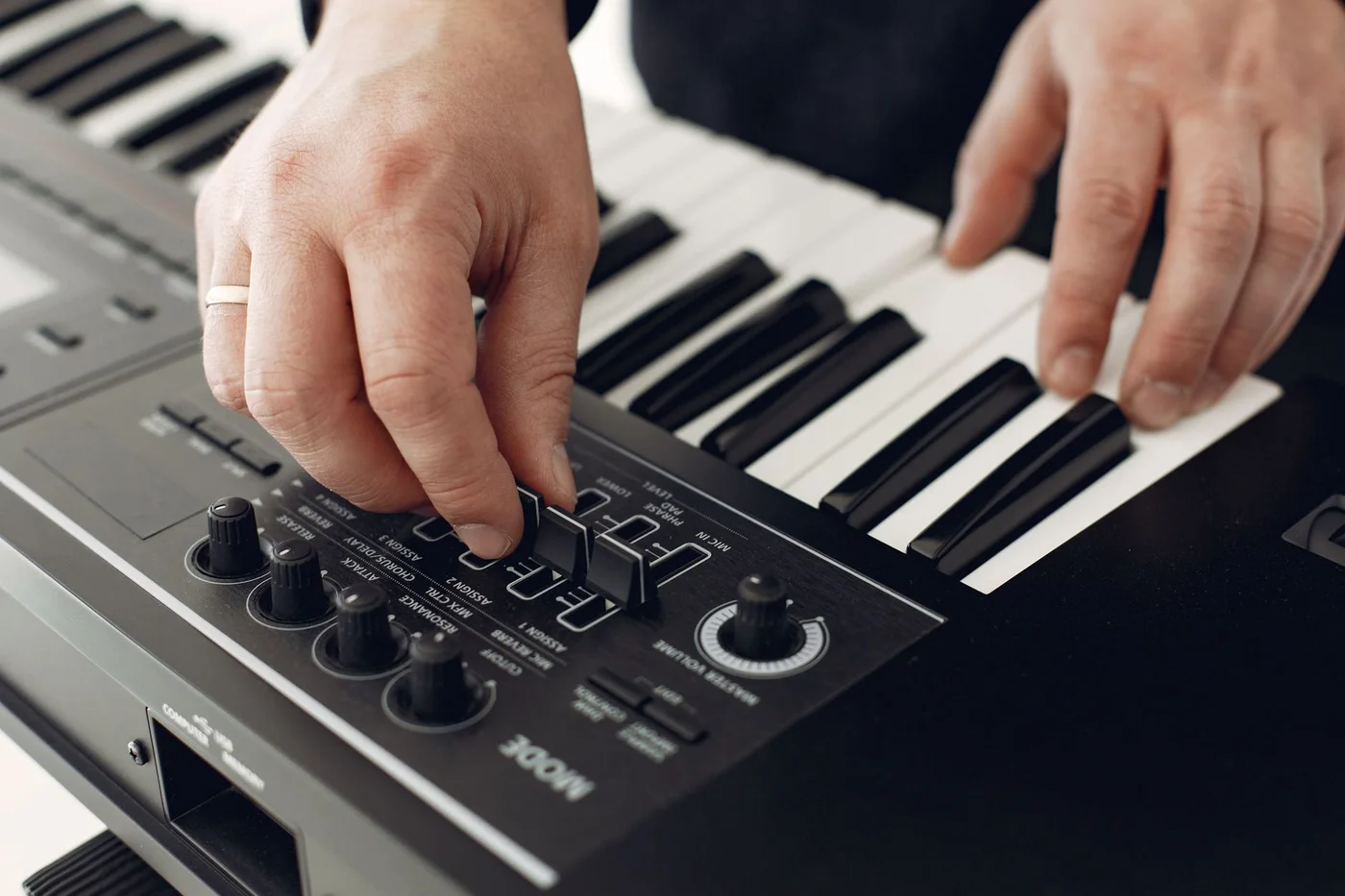
In the contemporary digital audio workstation (DAW) ecosystem, virtual orchestrations, synth layering, and software-sampled grand pianos drive modern arrangement. Because of this, you will rarely see a control room without a dedicated 88-key weighted master keyboard. Engineers and visiting session pianists demand authentic tactile resistance, progressive hammer feedback, and ultra-responsive velocity curves to execute complex compositions.
At BORA Piano, our research and engineering teams study these exact studio requirements when developing portable and digital keyboards. A studio-grade keybed must bridge the gap between acoustic authenticity and modern workflow: delivering low-latency MIDI transmission, consistent dynamic sensor response across all 88 keys, and seamless integration with hardware sound modules. When tracking complex piano arrangements, authentic key resistance ensures that the emotional dynamics intended by the player translate accurately into the DAW session.
5. Linear Active Nearfield Studio Monitors
Superb recording chains mean very little without uncolored, brutally honest monitoring. While large soffit-mounted main monitors provide impressive low-end impact for clients, the real mixing and tracking decisions happen on active nearfield monitors. Paired with calibrated acoustic treatment, these compact monitors offer linear frequency reproduction and clear stereo imaging, revealing phase anomalies, resonance buildups, and dynamic imbalances. They are designed not to flatter the music, but to expose technical flaws before a track is finalized.
The Lesson for Modern Creators
The ubiquity of these five studio staples highlights a fundamental principle of professional audio: enduring gear solves real-world acoustic and tactile challenges. From the transformer weight of vintage-style preamps to the responsive action of high-performance weighted keyboard controllers, building a world-class production environment relies on tools that honor the musician's nuance and deliver unwavering reliability.